
As the holiday season approaches, the legend of Santa Claus and his North Pole workshop comes alive. Central to this enchanting narrative are Santa’s tireless helpers, the Elves. These pint-sized, pointy-eared creatures have captured the hearts and imaginations of people worldwide. But where did the myth of Santa’s Elves originate? Join us on a journey through the history and mythology of these magical beings who make the holiday season a little more enchanting.
The Origins of Elves
Elves, as fantastical beings, have been a part of mythology and folklore for centuries, predating the modern Santa Claus legend. They can be traced back to ancient Norse mythology, where they were known as “álfar” or “elves.” In Norse mythology, elves were considered divine and were often associated with nature and beauty. They were believed to possess supernatural powers and were protectors of forests, animals, and humans.
Elves in Folklore
Elves also appeared in various forms in the folklore of different cultures. In Germanic folklore, they were seen as both helpful and mischievous beings, known to aid humans or play tricks on them. In English folklore, elves were thought to inhabit the countryside, and people left offerings for them to seek their favor.
The Modern Santa Connection

The modern portrayal of Santa’s Elves owes much to the 1823 poem “A Visit from St. Nicholas” (commonly known as “The Night Before Christmas”) by Clement Clarke Moore. This poem introduced Santa Claus as we know him today and depicted him with “eight tiny reindeer” and “a miniature sleigh.” Though the poem didn’t explicitly mention Elves, it contributed to the development of the modern Santa Claus legend, which later incorporated the idea of Santa having a workshop staffed by magical Elves.
“Christmas Elves,” Louisa May Alcott’s short story 1855
This charming tale marked a pivotal moment in the development of the modern Christmas Elf character and played a role in shaping the popular perception of these magical helpers.
Louisa May Alcott, renowned for her novel, “Little Women,” was a prolific American author and a prominent figure in 19th-century literature.
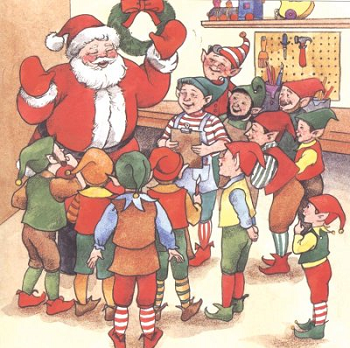
In Alcott’s “Christmas Elves,” readers were introduced to Santa Claus’s workshop, where a group of industrious Elves toiled away to create toys for children around the world. This portrayal of Santa’s Elves as dedicated toy-makers, working tirelessly in a cozy, snow-covered workshop, added depth to their character and firmly embedded them in the Christmas lore.
Santa’s Workshop Takes Shape
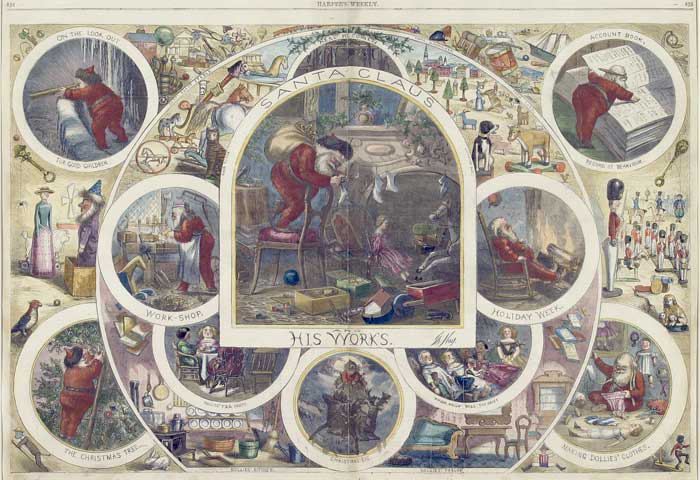
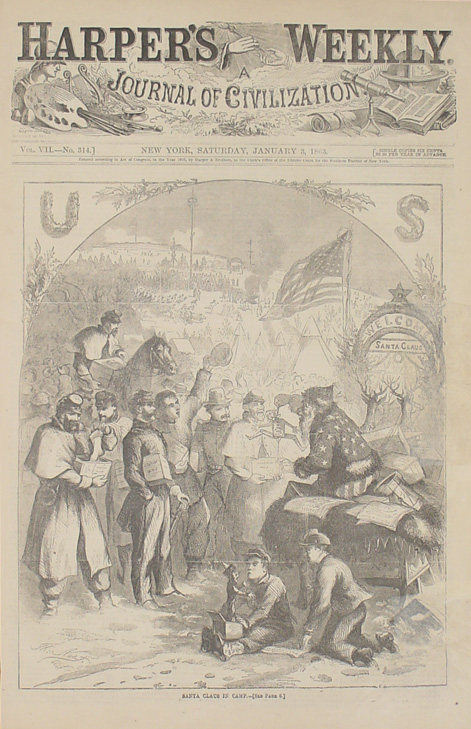
The concept of Santa’s workshop and its bustling team of Elves gained further popularity in the mid-19th century with the publication of Thomas Nast’s illustrations for Harper’s Weekly. These illustrations portrayed Santa Claus and his Elves busily preparing toys for children around the world.
The Influence of Popular Culture
Throughout the 20th century, Santa’s Elves continued to evolve in the public imagination. They became iconic characters in books, movies, and television shows. Perhaps one of the most iconic representations is the 1964 animated TV special “Rudolph the Red-Nosed Reindeer,” which featured Santa’s head Elf, Hermey, who dreams of becoming a dentist.
The legend of Santa’s Elves is a captivating blend of ancient mythology, folklore, and modern storytelling. These magical beings, with their dedication to toy-making and spreading holiday joy, have become an integral part of the beloved Santa Claus narrative. As we anticipate the holiday season each year, let’s remember the rich history and mythology that has brought Santa’s Elves to life, making our celebrations all the more enchanting. So, when you hang your stockings by the chimney with care, know that it’s the spirit of elves that makes this tradition truly magical.
 SANTA NYC